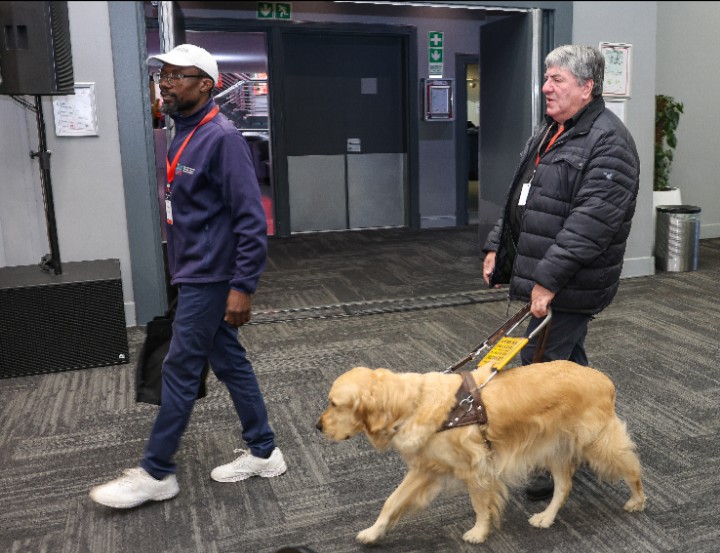


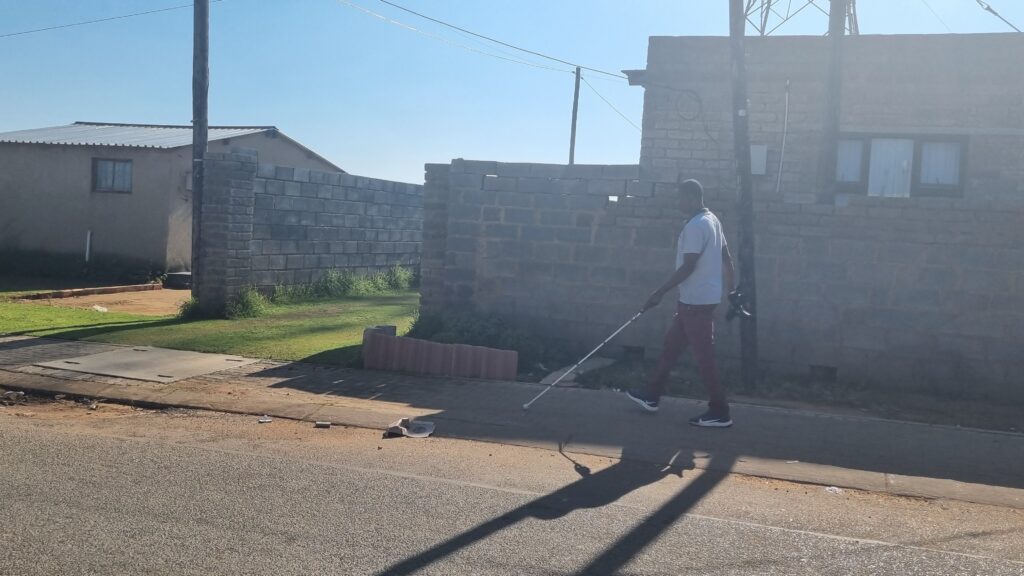
The City of Johannesburg Social Development Department, in partnership with the South African Mobility for the Blind Trust (SAMBT), today conducted Orientation and Mobility (O&M) training visits for some visually impaired trainees in Region C and Region D as part of the City’s ongoing commitment to promoting inclusion, dignity and independence for Persons with Disabilities (PWDs). The visits took place at beneficiaries’ homes in Braamfischerville in Region C and Molofo in Region D, where practitioners worked directly with four visually impaired beneficiaries. Two of the beneficiaries were born blind, while two became blind later in life.
From the MMC for Health and Social Development, Cllr Ennie Makhafola’s grant funding that empowers NPOs, the SAMBT organisation was contracted to undertake mobility training, which is divided into O&M and ‘skills of daily living’ training. The programme is an initiative focusing on disability inclusion for promoting self-reliance and improving access to economic and social opportunities for PWDs.
The City’s Social Development Department identified beneficiaries together with SAMBT, prioritising the totally blind and partially sighted residents who had never previously received O&M training and who were heavily dependent on others for their daily activities. Approximately 12 beneficiaries per programme are trained over a three-month period and all practitioners hold a two-year NQF Level 5 qualification in O&M training.
The programme is aimed at empowering visually impaired residents to navigate their surroundings safely and independently. Beneficiaries receive intensive three-month training in their own environments, allowing them to develop confidence and independence within the spaces they use every day.
Acting Director in the Targeted Beneficiaries Unit, Mr Nare Kubyane, said the programme demonstrates the City’s commitment to building an inclusive society where PWDs are empowered to live independently and with dignity.
“Inclusion is not just about access, it is about empowerment. By training blind people in orientation and mobility, the city is restoring independence, dignity confidence and the freedom to navigate the world without limitations.”
As part of the training, beneficiaries are taught white cane utilisation skills, including techniques for safe road crossing and obstacle detection. They are also trained in activities of daily living such as cooking, pouring liquids safely, money identification and the use of assistive devices including talking watches.
Helen Vosloo from SAMBT highlighted the transformative impact of independence training for visually impaired persons and explained that SAMBT’s approach is community based and personalised, ensuring that training happens within each beneficiary’s daily environment rather than in a training centre.
She further noted that O&M training significantly improves the quality of life and financial independence of beneficiaries.
“Many untrained blind people must have someone to walk with them to the shop or clinic and compensate the person for accompanying them. By the second or third month of training, many beneficiaries tell us it is the first time their grant money lasts the entire month because they no longer need to depend on others to accompany them.”
Through such partnerships, the City continues to advance programmes that break barriers, promote accessibility and restore independence for vulnerable residents across all seven regions of Johannesburg.
ISSUED BY THE CITY OF JOHANNEESBURG