

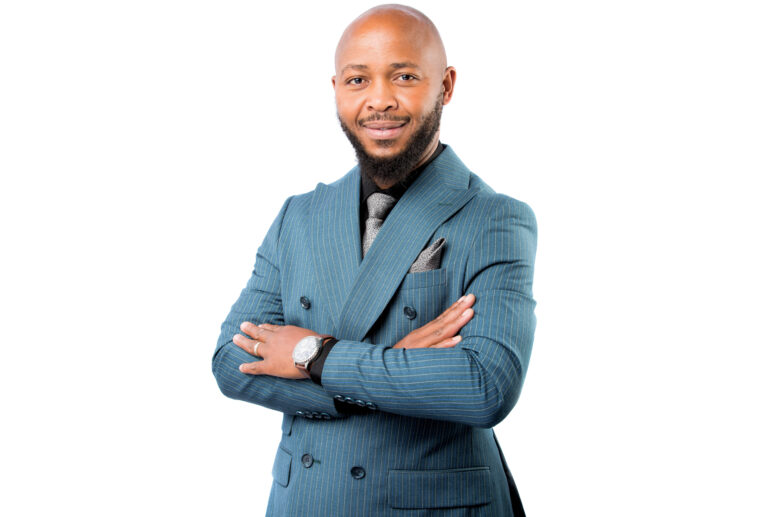

By Kumbula Xego, Senior Monitoring and Evaluation Associate at Injini
In nearly any conversation on refugee education – formal or otherwise – the narrative tends to be doom and gloom, focused on deficits: missing documentation, displacement, and the insurmountable language gap. It’s a narrative that reduces refugee children to a logistical problem that must be solved, rather than human capital that must be nurtured.
However, my work in monitoring and evaluation across the African EdTech and educational landscape has led me to view the situation differently. The challenges in educating displaced children have little to do with paperwork and everything to do with the systemic “othering” of the individual, and it starts the moment a child is categorised as a refugee first and a learner second. It’s a distinction that creates a psychological distance that no amount of funding can bridge.
To this end, if we want to build a truly inclusive education system for all children on the African continent, the bridge school model, specifically projects like Three2Six, a bridging education project for refugee and migrant children in South Africa, offers a useful blueprint for best practice. These environments prove that the most effective technology for learning isn’t a tech tool but, quite simply, a sense of belonging.
Resilience as a resource
One of the persistent assumptions in refugee education is around the language barrier. In a traditional system, a child’s lack of English or local language proficiency serves as a justification for exclusion or delayed entry. But the bridge school model demonstrates that language is not necessarily the barrier we think it is, but often merely masks a lack of access.
At Three2Six, for example, we see children who have fled conflict zones and navigated borders mastering English and local languages within a single year. The cognitive resilience of many (most!) of these children is something that the traditional classroom and indeed the education system doesn’t tap into. Displaced children are, typically, experts at navigating complex systems and shifting cultural contexts.
Rather than viewing their background – their story – as a hurdle, their resilience must be appreciated as a resource. Once that barrier is cleared, mastery of the language happens rapidly. This is not because the language is easy, but because the environment provides the psychological safety necessary for the brain to transition from survival mode to learning mode. Inclusion is not about adapting the child to fit the system but ensuring the system doesn’t treat the individual as an anomaly.
The fundamental role of the teacher
In any education context, the role of the teacher is key, and even more so in a bridge school. In these spaces, the role of the educator evolves fundamentally to include caregiving, trauma counselling, and, most crucially, the facilitators of belonging. They are the structural engineers holding up the bridge.
In order for the metaphorical bridge to hold, teachers must be supported, practically and psychologically, to manage the complex emotional needs of displaced learners. Truly inclusive education can only be sustainable if the human infrastructure supporting it is empowered and resilient. We must move beyond funding “slots” for students and start funding the holistic support of the educators.
When a teacher feels secure and supported, they can project that stability onto their students. In a bridge school, a stable, warm environment isn’t a luxury; it’s the pedagogical foundation that makes catching up possible.
The efficiency of belonging
UNICEF estimates that there are 4.9 million refugee children in Africa, which begs a pertinent question: How do we scale refugee education? The answer is both simple and layered – let EdTech do the tech things and let people do the human things.
EdTech is a vital tool for streamlining as it can manage student data, provide personalised practice in literacy and numeracy, and help bridge the gap for children who have missed years of formal schooling, for example. EdTech is extremely efficient in managing the mechanics.
But there is an efficiency of belonging that no software can replicate. A child who feels they belong will learn more in three hours than a child who feels “othered” will learn in three weeks. Inclusion happens when a child walks into a classroom and sees their identity reflected and respected – and within that belonging is the efficiency that scales education outcomes.
What bridge schools show us is that EdTech can and must be leveraged as a tool to manage the administrative and repetitive burdens teachers face. In the context of teaching displaced children, EdTech must serve to create “heart-room” for teachers to focus on the human connection.
How to thrive
When we invest in belonging, we aren’t just helping children “catch up” but nurturing individuals who, having been given a stake in their new community, are eager to give back.
We see former Three2Six students moving into mainstream schools and excelling, often becoming leaders and mediators within their new peer groups. Because they were not treated as burdens during their most vulnerable moments, they do not view themselves as such. They view themselves as contributors.
Inclusive education is not only about documentation or language proficiency but also about appreciating displaced children for the unique cognitive strengths they bring to the classroom. By supporting the supporters through directly funding the holistic well-being of teachers in high-pressure, inclusive environments, we build the infrastructure for resilience.
Refugee education narratives must move beyond the doom and gloom. When we appreciate the importance of belonging, we empower a child to thrive.