




BY TANA MALINGA
Seshego becomes the launchpad for township and rural entrepreneurs as government expands funding, while traditional leadership is challenged to ensure that opportunity reaches the forgotten.
SESHEGO, POLOKWANE
The battle against poverty cannot be won while aspiring entrepreneurs remain trapped on the margins of economic opportunity. This was the powerful message emerging from the relaunch of the enhanced Township and Rural Entrepreneurship Programme (TREP), held at Seshego Stadium in Polokwane on Tuesday, 27 October 2026.
At the heart of the engagement was a call for rural and township entrepreneurs, particularly those from disadvantaged communities, to rise beyond economic hardship and seize opportunities capable of transforming their livelihoods.However, the responsibility does not rest on entrepreneurs alone. Traditional leaders, government institutions and development agencies must ensure that the promise of economic empowerment translates into tangible opportunities for ordinary people.
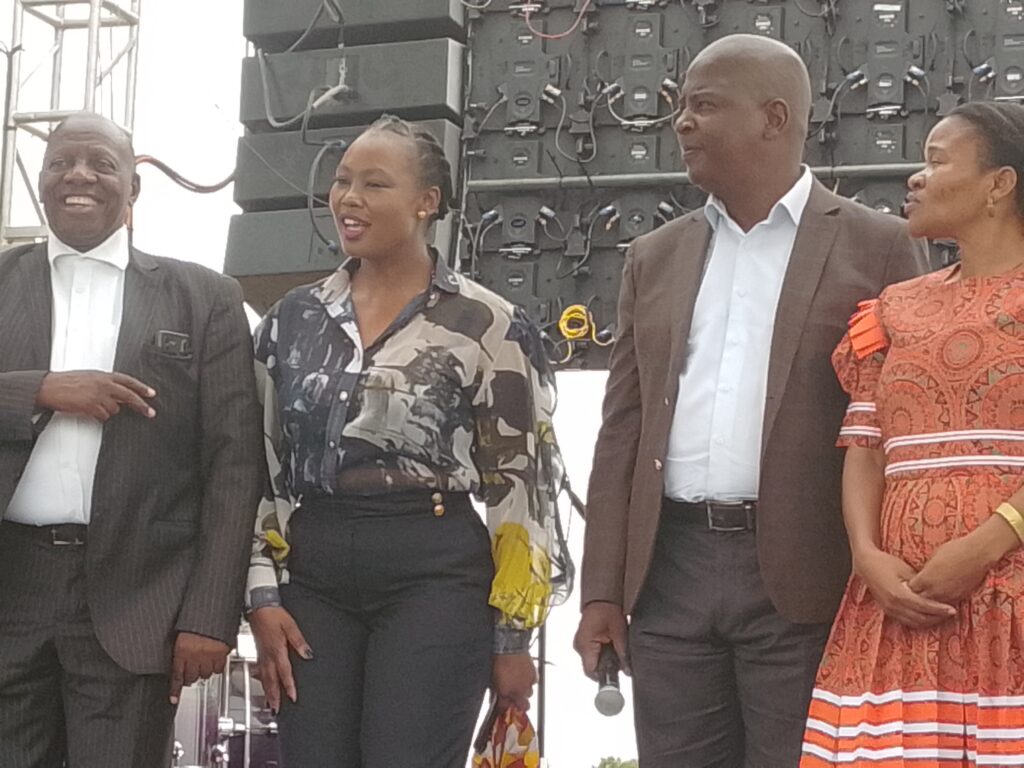
HOSI PHENI NGOVE: LEADERSHIP MUST NOT BECOME A GATEWAY TO FAVOURITISM
Chairperson of the House of Traditional Leaders, Hosi Pheni Ngove, delivered a pointed message about the responsibility of traditional and royal leadership in creating an environment where economic opportunities are accessible to all qualifying entrepreneurs.His message challenged leaders to understand that holding traditional authority does not entitle them to determine who deserves access to government funding or to favour people simply because they are personally connected to those in positions of influence.
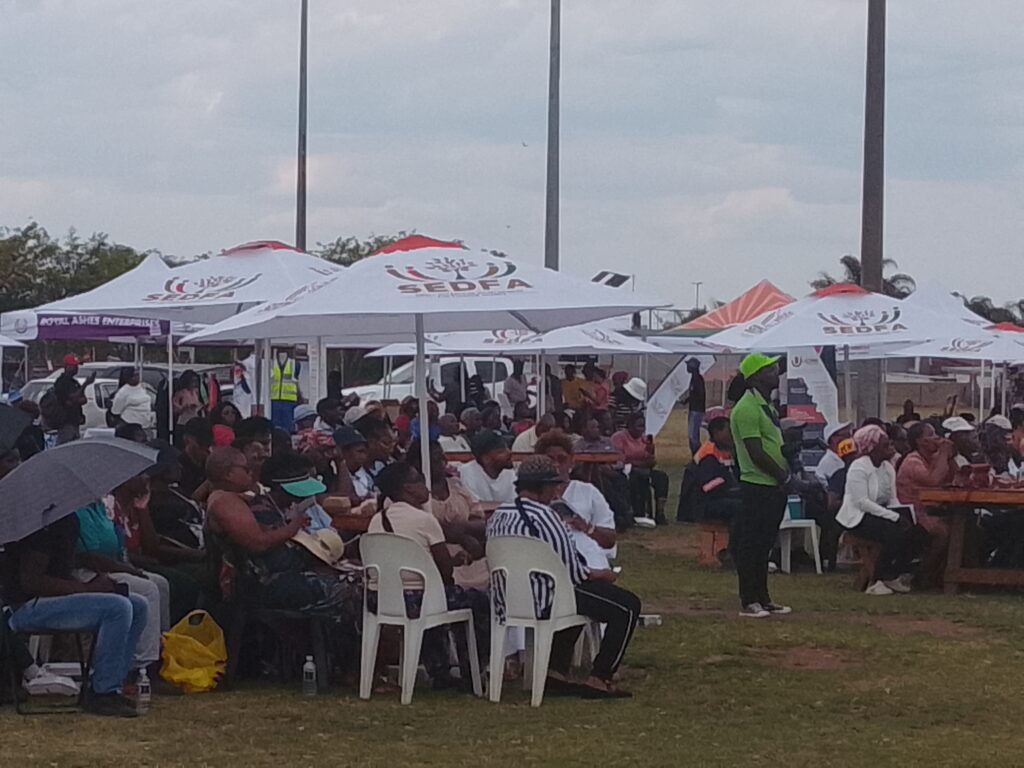
The emphasis was clear: economic opportunities must not become the private property of those closest to power.
Traditional leaders should encourage their communities to seek information, understand programme requirements and submit applications through the appropriate channels. Their responsibility is to open doors through awareness, guidance and community mobilisation, rather than creating the impression that they control the approval of applications or the allocation of funds.Ngove’s message also carried a warning about the consequences of leadership that overlooks the material conditions of its people.A community battling hunger, unemployment and frustration cannot be expected to remain indefinitely patient while opportunities appear inaccessible or unfairly distributed. When residents feel abandoned, resentment can grow, undermining the trust between communities and those entrusted with leading them.Whether traditional or royal, leadership must remain grounded in service, fairness and accountability.Authority must never become a barrier between people and opportunity.
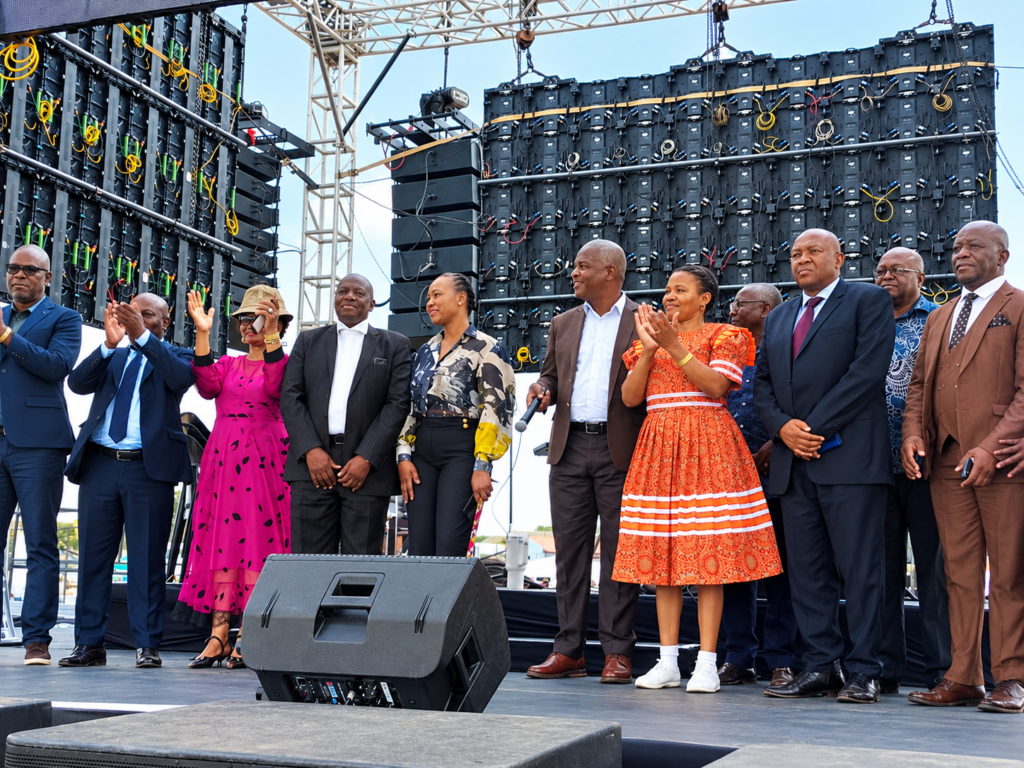
R3 MILLION: A BIGGER WINDOW FOR RURAL AND TOWNSHIP BUSINESSES
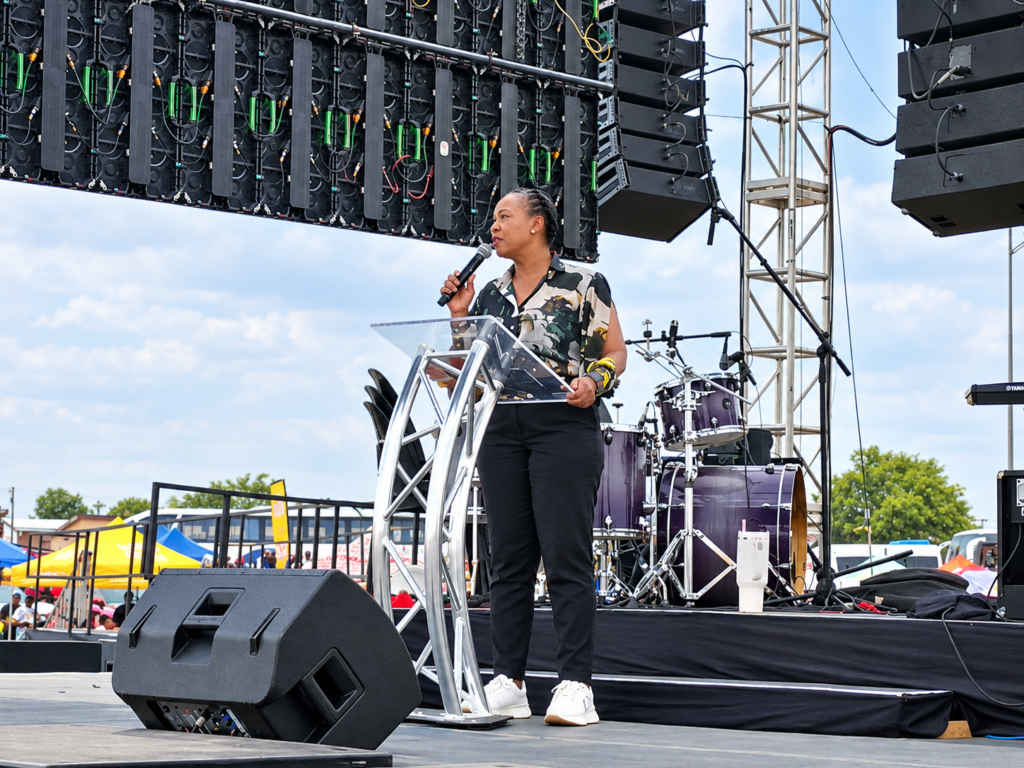
The economic opportunity took centre stage as Minister of Small Business Development, Stella Tembisa Ndabeni, officially relaunched the enhanced TREP, introducing a higher funding ceiling and improved support for qualifying micro, small and medium-sized enterprises (MSMEs).
The maximum funding threshold has increased from R1 million to R3 million, giving qualifying businesses greater scope to expand operations, acquire machinery, improve infrastructure, increase production and explore new markets.Under the enhanced financing arrangement, qualifying funding above R250,000 and up to R3 million can comprise 60% loan financing and 40% grant financing, subject to programme criteria.The programme also provides for repayment periods of up to 60 months and a moratorium of up to six months, subject to applicable conditions. The published programme information further indicates a 5% interest rate.
These changes are designed to make finance more accessible and affordable while strengthening business development and post-investment support.The Department of Small Business Development has also identified the need to improve application turnaround times and reduce unnecessary administrative bottlenecks without compromising accountability.The funding is not automatic, however. Applicants must meet the relevant eligibility requirements and undergo the prescribed assessment process.
LIMPOPO’S NUMBERS TELL A STORY OF OPPORTUNITY
The scale of the intervention is significant.
According to the figures contained in the minister’s keynote address, TREP has disbursed approximately R3.1 billion nationally since its inception, financing more than 430,000 MSMEs and supporting 444,022 jobs through employment creation and retention.In Limpopo alone, the programme has disbursed approximately R721 million, financed 106,727 MSMEs and supported 108,437 jobs, including 46,628 jobs created and 61,809 maintained.The address also reported substantial support for black-owned, women-owned and rural enterprises, reflecting the programme’s emphasis on historically disadvantaged communities.These figures demonstrate the programme’s reported reach. The next challenge is ensuring that the enhanced funding translates into sustainable businesses, stronger household incomes and employment that lasts.
NDABENI: ECONOMIC FREEDOM MUST REACH BEYOND THE CITIES
Delivering the keynote address, Minister Ndabeni placed the relaunch within the broader struggle to build an inclusive economy that is not concentrated exclusively in established commercial centres.
She drew attention to the legacy of Peter Ramoshoane Mokaba, highlighting the importance of ensuring that the circumstances into which young people are born do not determine the limits of their future.
The minister stressed that entrepreneurs need more than finance. They also require business training, regulatory guidance, market access, appropriate infrastructure and ongoing support to build sustainable enterprises.The establishment of the Small Enterprise Development and Finance Agency (SEDFA), through the merger of Seda, sefa and the Co-operative Banks Development Agency, is intended to bring financial and non-financial support under a more coordinated institutional framework.
Her message to entrepreneurs was direct: engage with SEDFA, understand the programme requirements and use available business development assistance to strengthen applications and improve the prospects of building viable businesses.
The programme supports qualifying enterprises across several sectors, including retail, clothing and textiles, bakeries, cooked-food businesses, automotive services, personal care and artisan enterprises.
THE REAL TEST BEGINS AFTER THE LAUNCH
The relaunch at Seshego Stadium has placed a renewed opportunity before township and rural entrepreneurs. But the true measure of success will not be the announcement of millions of rands in funding.
It will be whether an aspiring entrepreneur in a remote village can access accurate information, submit an application without unnecessary obstacles and receive a fair assessment.
It will be whether a struggling small business can acquire the equipment needed to expand, employ more people and contribute to the local economy.
And it will be whether traditional leaders, municipalities, government departments and development agencies work together to ensure that opportunity reaches beyond established networks of influence.
The message from Seshego is unmistakable: rural and township entrepreneurs must not be left behind, and leadership must never stand in the way of their progress.
With the enhanced TREP now relaunched, the challenge is to turn economic promises into measurable progress, one business, one job and one community at a time.