




Tana Malinga
The message emerging from Gauteng’s province-wide “It Takes a Village to Raise a Child” campaign is clear: government cannot secure the future of children alone, and communities can no longer afford to stand on the sidelines.
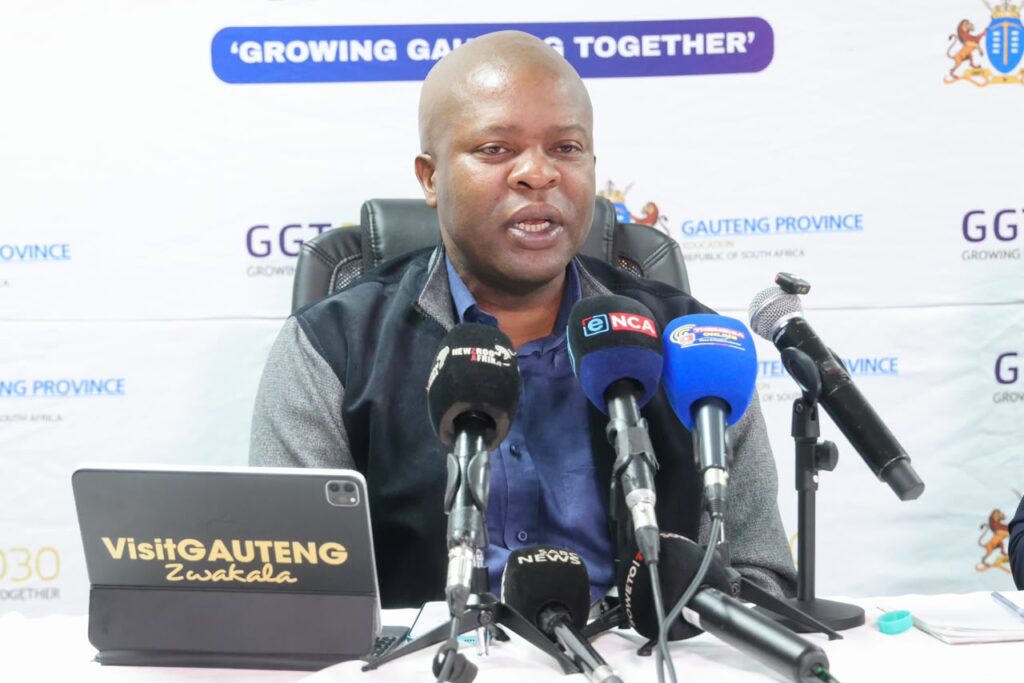
Reporting back on the extensive outreach programme, Gauteng MEC for Education, Sport, Arts, Culture and Recreation Lebogang Maile said the province had taken government out of its offices and into communities to listen, account and develop practical responses to the challenges confronting children.
Between May and July 2026, the two departments planned 127 community and institutional engagements, successfully completing 90, including 41 community meetings, 25 unannounced school visits and 24 sports hub engagements.
The programme reached 11 294 people directly, while education-related digital platforms generated more than 10.2 million views and impressions and over 90 700 direct online interactions.
But beyond the numbers, the engagements exposed a deeper reality: education cannot be separated from the conditions in which children live.
Communities raised concerns about crime, gangsterism, substance abuse, bullying, gender-based violence, unemployment, family instability, poor infrastructure, overcrowding, weak school governance, corruption, inadequate learner support and limited access to sport, arts, culture and recreational opportunities.
SAFE SCHOOLS START WITH SAFE COMMUNITIES
School safety emerged as one of the most urgent issues.
Parents, learners, educators and community leaders called for stronger action against violence, bullying, drugs, vandalism, intimidation, weapons and criminal activity around schools.
Maile’s report stresses that policing alone cannot solve the problem.
The province is strengthening cooperation with SAPS, Community Policing Forums, municipalities, social workers, psychologists, School Governing Bodies and community structures, while expanding preventative and psychosocial interventions.
The message is particularly direct: schools cannot be islands of safety surrounded by unsafe communities.
Parents are being urged to take greater responsibility for their children’s attendance, behaviour, homework and safety, while communities are encouraged to protect schools from vandalism and criminality.
Sport, arts, culture, libraries and recreation are also being positioned as part of the safety response.
Sports hubs can give young people structured alternatives to gangsterism and substance abuse. Libraries create safe spaces for reading and learning. Arts and cultural facilities strengthen identity, creativity and social cohesion, while recreation contributes to healthier communities.
GOVERNMENT READY TO TAKE MUNICIPALITIES TO TASK OVER SCHOOL ELECTRICITY
One of the strongest accountability messages emerging from the report concerns basic municipal services.
Communities raised repeated concerns about unreliable water, electricity interruptions, poor roads, illegal dumping, inadequate street lighting and deteriorating environments around schools.
Importantly, government has indicated that where a school’s electricity has been disconnected despite the required municipal payments having been made, the provincial government is prepared to pursue legal avenues against municipalities to ensure electricity is restored.
The position sends a firm message that learners should not be made to pay the price for disputes or administrative failures between public institutions.
Where schools have fulfilled their payment obligations, the provincial government believes the learning environment must be protected and essential services restored.
This also reinforces the broader principle of cooperative governance: municipalities, provincial departments and national government must work together because a school cannot provide quality education without functioning water, electricity, sanitation, roads and other essential services.
MAZIBUYE CAMPAIGN TO BRING STOLEN SCHOOL PROPERTY BACK
Another significant intervention is the Mazibuye campaign, which seeks to recover school property that has been stolen or removed from educational institutions.
The campaign is aimed at bringing back essential assets including chairs, desks and tables that belong in schools and should be available to learners.
The initiative places community responsibility at the centre of protecting public resources.
The message is simple: school property belongs to learners, and removing it from schools takes away directly from the quality of their learning environment.
The campaign therefore adds another layer to Gauteng’s fight against vandalism, theft and the misuse of public assets.
INFRASTRUCTURE MUST CREATE OPPORTUNITY
Infrastructure was another dominant theme throughout the outreach.
Communities welcomed investment in schools, libraries, sports facilities, theatres, archives, combi courts and recreational spaces, but demanded faster implementation, better maintenance and stronger protection of public assets.
Government maintains that these facilities are not simply bricks and mortar.
A library can improve literacy. A sports facility can provide a pathway away from crime. A cultural centre can preserve heritage while opening doors to the creative economy. A recreational facility can strengthen health and social cohesion.
Some projects have experienced delays linked to procurement, contractual non-compliance and community disruptions, but corrective measures are being implemented to restore momentum.
NO GAUTENG CHILD SHOULD BE LEFT BEHIND
Learner admissions and overcrowding remain major pressures in Gauteng, particularly as the province continues attracting families seeking economic opportunities.
Parents raised concerns about classroom shortages, high-demand schools and learner placement.
The province says it is continuing to strengthen the Gauteng Online Admissions System, working with the Department of e-Government and other technical, legal, procurement and technology structures to improve stability, transparency and efficiency.
Yet the report acknowledges that technology cannot solve everything.
Learners still need classrooms, teachers, learning materials, electricity, water, sanitation and reliable transport.
THE FOUNDATION STARTS BEFORE GRADE 1
Early Childhood Development also featured prominently.
Through the Bana Pele Mass Registration Drive, Gauteng is working to stabilise and expand the ECD sector, simplify registration, improve compliance and strengthen resources and practitioner development.
The province currently has 3 114 Early Learning Programmes on its departmental master list, supporting approximately 134 763 children and more than 11 200 practitioners.
A further 1 415 public schools offer Grade R, serving approximately 137 300 learners.
The objective is clear: quality education must begin long before a child enters Grade 1.
INCLUSION MUST BECOME REALITY
For learners with disabilities, communities called for stronger access to specialised services, assistive devices, learner transport and therapeutic support.
Gauteng currently supports approximately 2.8 million learners across about 2 200 public schools, including 131 special schools, 30 special schools functioning as resource centres and 51 designated Full-Service Schools, with another 60 schools being prepared for Full-Service status.
The province also has 236 Learner Support Educators, approximately 670 specialist support personnel, 135 district inclusion officials and educational psychologists supporting learners.
More than 43 000 learners receive specialised education in Gauteng’s special schools, while thousands more are supported in ordinary schools through the Screening, Identification, Assessment and Support (SIAS) system.
The principle is unequivocal: inclusive education is not charity; it is a matter of equality, dignity and constitutional rights.
GOOD GOVERNANCE PROTECTS MONEY MEANT FOR CHILDREN
Communities also demanded greater accountability over school finances.
Concerns included procurement irregularities, unauthorised expenditure, alleged abuse of school finances and failures to comply with financial management responsibilities.
The province says investigations continue into allegations involving principals, School Governing Body members and officials, with disciplinary, criminal and recovery processes to follow where evidence establishes wrongdoing.
The message is uncompromising: money meant for children must reach children.
Every rand lost through corruption represents a lost opportunity for infrastructure, learning materials, learner support or development.
MENTAL HEALTH CANNOT BE AN AFTERTHOUGHT
Learner and teacher wellbeing also emerged as a critical concern.
Communities reported anxiety, trauma, depression and behavioural challenges linked to the social and economic pressures confronting families.
Government is strengthening support through psychologists, social workers, learner support educators, district-based support teams and partnerships with health and social development professionals.
The report argues that educational success cannot be measured through examination results alone.
A successful education system must also develop discipline, compassion, responsibility, integrity, patriotism, respect and character.
THE VILLAGE MUST NOW STEP FORWARD
Perhaps the most important conclusion from the outreach programme is that the responsibility for education extends far beyond the school gate.
Parents must parent. Communities must protect schools. Businesses must invest in young people. Faith-based organisations must contribute to moral development.
Artists and cultural practitioners must inspire. Retired professionals and educators can mentor. Young people themselves are being called upon to reject violence, gangsterism, drugs and criminality in favour of education, innovation, discipline and service.
The campaign has therefore become more than a consultation exercise.
It has produced a provincial picture of the pressures facing Gauteng’s children — and a call for government, communities and institutions to respond together.
From school safety and electricity to admissions, infrastructure, ECD, inclusive education, corruption, mental health, sport, arts, culture and the recovery of stolen school property through Mazibuye, the central message remains the same.
Education belongs to society.
Government has reaffirmed its commitment to modern schools, quality ECD, inclusive education, safer learning environments, accountable governance, sports development, libraries, cultural infrastructure and stronger partnerships with communities and municipalities.
But government also insists that it cannot raise a child alone.
The outreach reached more than 11 000 people directly and generated millions of digital interactions, demonstrating that communities are willing to participate.
The next challenge is turning that participation into sustained action.
Because the success of Gauteng’s children will ultimately depend on whether the entire village, government, parents, schools, communities, business and civil society, is prepared to stand together.
When the village stands together, every child stands a better chance. And when every child succeeds, Gauteng succeeds.
IMAGE SOURCED