





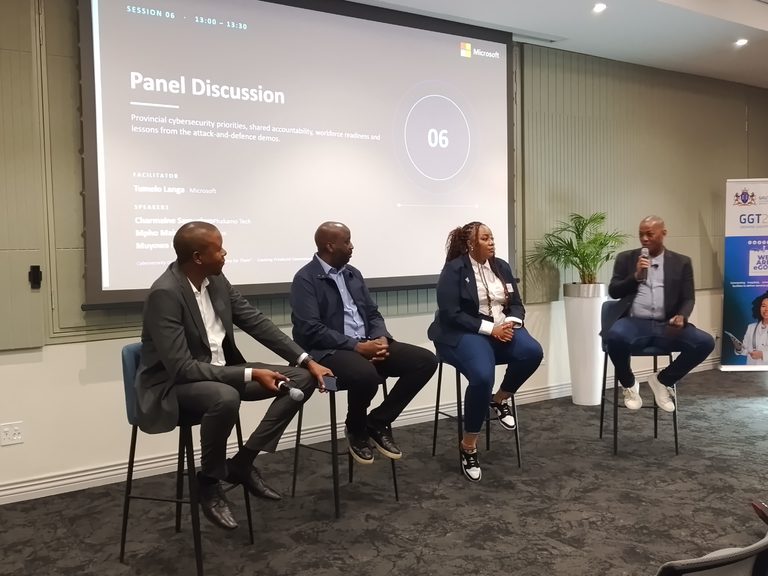
Cybersecurity is everyone’s responsibility as government, technology experts and citizens unite against the growing threat of cybercrime.
The danger does not always announce itself. Sometimes, it arrives disguised as an ordinary email, an urgent message, a familiar-looking link or a request that appears too convincing to question.
One careless click can expose information. One compromised password can put an account at risk. One moment of misplaced trust can create consequences that extend far beyond an individual screen.
This is the reality that makes cybersecurity awareness an urgent responsibility for every South African.
Against this backdrop, the Gauteng Department of e-Government, Research and Development, in partnership with Microsoft, convened the Gauteng Cyber Security Summit on Friday, 9 October 2026, at Microsoft’s offices in Corporate Hill, Bryanston, Sandton, as part of Cybersecurity Awareness Month.
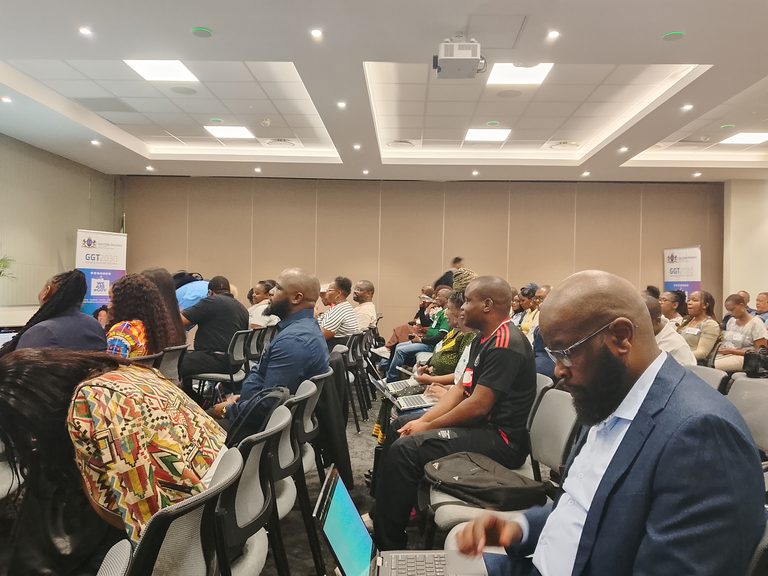
The engagement brought together government leaders, cybersecurity experts, technology specialists and key stakeholders to confront the growing threat of cybercrime and strengthen the province’s digital resilience.According to the official government announcement, the discussions focused on emerging cyber threats, protecting government data and systems, incident response, digital resilience, cybersecurity awareness, skills development and public-private partnerships.
The message was clear: as more public services move online, protecting the digital environment must advance alongside technological progress.
BEHIND THE SCREEN, REAL PEOPLE ARE AT STAKE
Cybersecurity is not merely about computers, sophisticated software or technical teams working behind closed doors. It is about protecting people’s information, safeguarding public services and preserving the trust that allows communities to participate confidently in an increasingly connected society.
For residents, that may mean protecting personal details. For businesses, it may mean securing customer information and financial transactions. For government, it means strengthening the systems on which communities increasingly depend.
Gauteng e-Government MEC Bonginkosi Dhlamini underscored the importance of continuous vigilance in the official pre-event announcement.“The recent security incident has reinforced an important lesson that cybersecurity cannot be treated as a once-off exercise,” Dhlamini said.
He further stressed the need to continuously test, monitor and strengthen government systems as more services become available online, emphasising that residents must be able to trust those services and know that their information is protected.
The statement captures a principle that deserves wider public attention: digital transformation must be accompanied by digital responsibility.
THE NUMBERS DEMAND OUR ATTENTION
South Africa’s cybersecurity challenges are also reflected in national research conducted by the Council for Scientific and Industrial Research (CSIR), in collaboration with the Cybersecurity Hub under the Department of Communications and Digital Technologies.
The CSIR’s surveys, conducted at the end of the 2023/24 financial year and involving more than 1,200 participants across four survey areas, highlighted significant vulnerabilities.Among the findings, 47% of surveyed organisations reported experiencing between one and five cybersecurity incidents during the preceding year. Meanwhile, 88% of participants reported having experienced at least one security breach.The research also identified a serious awareness and skills challenge: only 32% of respondents indicated that more than half of their employees had received cybersecurity awareness training during the previous year.
In addition, 63% reported cybersecurity positions that were partially or fully unfilled.These figures relate to the survey period; they should not be mistaken for measurements taken at the October 2026 summit. Nevertheless, they illustrate why sustained investment in awareness, skills and preparedness matters.The CSIR has recommended stronger cybersecurity investment, workforce development, incident-response capabilities, digital identity protection and cooperation between government and the private sector.
The lesson is unmistakable: technology alone cannot create a secure digital environment. People, processes, skills and systems must work together.
A RECENT INCIDENT REINFORCES THE NEED FOR VIGILANCE
The summit also took place against the backdrop of a cybersecurity incident involving Gauteng’s e-Panic Button environment.In a statement dated 29 September 2026, the Gauteng Provincial Government reported that an attempted security breach had been identified and addressed. The government stated that its investigation had established that no citizens’ personal information had been compromised in that incident, while corrective measures and further testing were being pursued.That statement must be understood in its specific context. It does not mean that all digital systems are immune to attacks, nor does it remove the need for continued monitoring and improvement.
Instead, it reinforces the importance of identifying suspicious activity, responding promptly, investigating incidents and strengthening systems before weaknesses can be exploited.Cybersecurity is not a declaration that nothing will ever go wrong. It is a continuing commitment to reduce risks, detect threats and respond responsibly when incidents occur.
EVERY CITIZEN CAN BECOME A FIRST LINE OF DEFENCE
While governments and technology companies have important responsibilities, individual behaviour can make a meaningful difference.
Pause before you click. Verify before you trust. Protect before you share.
Question unexpected messages. Emails and text messages that demand immediate action may be attempts to manipulate you into revealing sensitive information.
Check links before opening them. Be cautious of unfamiliar addresses, suspicious attachments and websites that imitate trusted organisations.Never disclose one-time PINs or passwords. Legitimate security practices should never require you to hand over confidential authentication details to an unverified person.Strengthen your accounts. Use unique passwords and multifactor authentication wherever available.Keep devices updated. Software updates often address security weaknesses that criminals may attempt to exploit.Verify financial instructions independently.
If someone requests an urgent payment or a change to banking details, confirm the request through a trusted channel you already know.Report suspicious activity quickly. Contact the relevant institution using its official reporting channels rather than responding to a suspicious message.For organisations, awareness must be reinforced through regular training, access controls, tested backups, security monitoring and clearly defined incident-response procedures.For families, the conversation should include children and older people, who may encounter scams designed to exploit trust, fear or limited digital experience.For businesses, especially smaller enterprises, cybersecurity should be treated as part of responsible operations rather than an expense to consider only after an incident.
PARTNERSHIP MUST TRANSLATE INTO LASTING PROTECTION
The collaboration between Gauteng e-Government and Microsoft places public-private cooperation at the centre of the cybersecurity conversation.Government institutions carry responsibility for protecting public services and information. Technology partners contribute expertise and tools, while research institutions help identify vulnerabilities, build knowledge and develop local capabilities.When these roles complement one another, the opportunity is to build a stronger culture of prevention, preparedness and responsible digital participation.However, the true value of a cybersecurity engagement will ultimately be measured by sustained improvements in awareness, skills, system protection and incident response.The official event announcement established the summit’s objectives, but a detailed post-event report confirming specific resolutions, new technology deployments, funding commitments or training targets was not available for verification at the time of writing. Such outcomes should be reported once confirmed through official documentation.
THE FUTURE MUST BE DIGITAL – BUT IT MUST ALSO BE SAFE
South Africa’s digital future holds significant promise. Online public services can improve access, technology can create opportunities, and digital platforms can connect people to information and services more efficiently.
That promise, however, depends on trust.
People must be able to use digital services without being left unaware of the risks. Institutions must be prepared to respond when threats emerge. Businesses must protect the information entrusted to them. And every user must understand that a small security decision can have a significant impact.
The Gauteng Cyber Security Summit therefore speaks to a responsibility that extends beyond the meeting room and beyond Cybersecurity Awareness Month.
It is a call for vigilance without fear, innovation without complacency, and collaboration that delivers meaningful protection.Let us become a nation that thinks before it clicks, questions what appears suspicious, protects what matters and reports what threatens our digital safety.
Because behind every password is a person. Behind every protected system is a service someone may depend on. And behind every responsible digital decision is an opportunity to prevent harm.
A safer digital future is not built by technology alone. It is built by informed people, prepared institutions and a shared commitment to protecting one another.