





By Tana Malinga

South Africa may still love its cars, but the latest industry intelligence suggests that the way motorists choose, finance and define value in a vehicle is undergoing a dramatic reset.

Managing Director
Cars.co.za
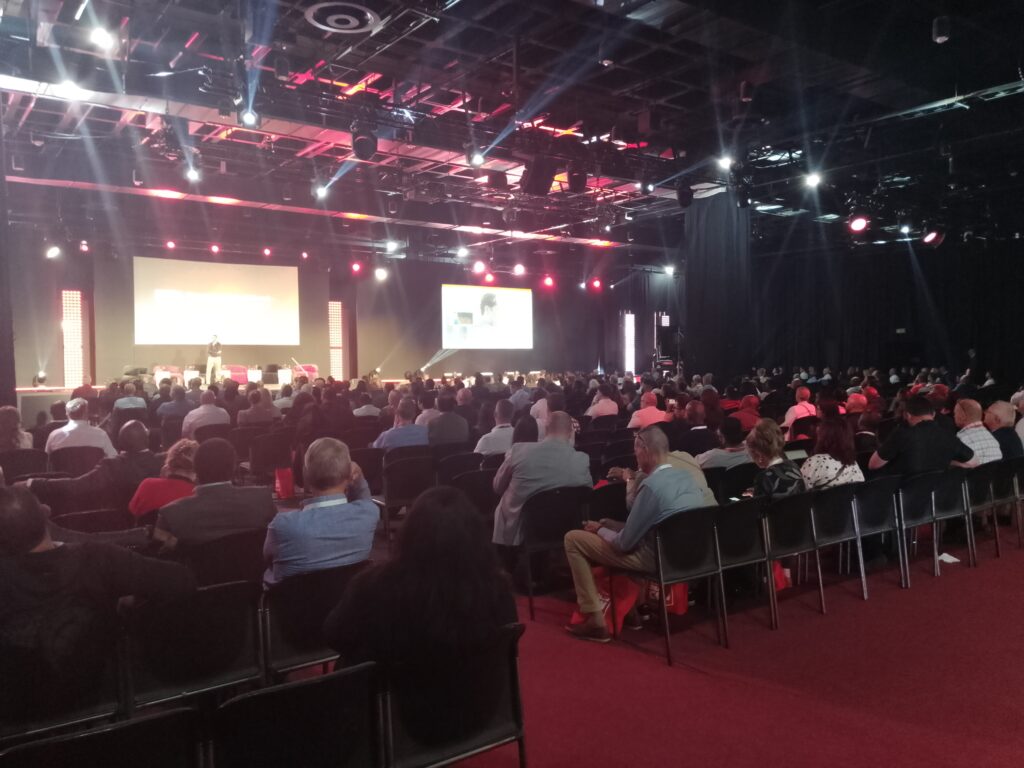
That was the big message at Cars.co.za DealerCon 2026, held at the Sandton Convention Centre on 17 September, where the launch of the Cars.co.za Industry Report 2026 delivered a fascinating snapshot of a market caught between resilient demand, household affordability pressures and the extraordinary rise of Chinese vehicle manufacturers.
And among the report’s most revealing contributions is the data from Absa Vehicle and Asset Finance (AVAF) – drawn from an extraordinary 2.56 million new and used vehicle finance applications processed between January 2023 and June 2026.
The numbers tell a story that goes far beyond which badge is sitting on the bonnet.
The car market is moving but the buyer has changed. South Africa’s new-vehicle market has shown remarkable resilience.
July 2026 produced the highest monthly new passenger-vehicle sales level since September 2014, while total new-vehicle sales continued to show year-on-year growth. Yet behind those encouraging numbers is a consumer becoming increasingly deliberate about every rand spent.
The Cars.co.za consumer survey of more than 2,000 shoppers found that 70.8% identified price as a key consideration, while 52.5% prioritised fuel efficiency.
More than half of consumers – 53% – said they had reduced discretionary spending, while financial optimism declined from 71% to 66%. In other words, South Africans are still shopping for cars. But they are shopping with a calculator in one hand and a smartphone in the other.
Enter Absa and the numbers behind the changing buyer. This is where the Absa data becomes particularly compelling.
AVAF’s analysis of 2.56 million finance applications provides an unusually broad view of what consumers are actually trying to finance rather than simply what they say they like. According to the report, SUVs have strengthened their position dramatically within the combined SUV, bakkie and body-on-frame SUV finance market. Their share rose from 60.2% in Q2 2023 to 67.6% in Q2 2026. But perhaps the most eye-catching signal is coming from China. Chinese brands now account for 40% of SUV finance applications recorded by Absa, compared with just 19% in 2023.

Managing Executive
Absa Vehicle & Asset Finance
That is not simply a new-brand story.
It is a consumer-confidence story.
Chinese manufacturers recorded 72% year-on-year sales growth in Q2 2026, compared with only 3% growth among traditional manufacturers, pushing their combined market share to approximately 22%.
For dealers, manufacturers and finance houses, the message is difficult to ignore: value is increasingly challenging traditional brand loyalty.The Chinese challenge is no longer knocking at the door. It is already inside the showroom. Chinese brands have expanded from offering relatively affordable alternatives into SUVs, entry-level vehicles, bakkies and new-energy vehicles. The Cars.co.za report notes that shoppers are increasingly evaluating vehicles through the lens of features, price, running costs and overall value rather than simply the country in which a vehicle was manufactured.
And Absa’s finance data provides perhaps the clearest evidence of that changing mindset. Chinese brands’ share of SUV finance applications has more than doubled in three years. That shift is particularly significant because finance approval is where aspiration meets affordability.
A vehicle can generate online excitement, but a finance application reveals whether a consumer is prepared to put that choice into a monthly household budget.
BYD, EVs and a different kind of South African motorist.The transformation does not end with SUVs. New-energy vehicles remain a relatively small part of the overall market, but their presence is growing.Hybrid stock on Cars.co.za has risen from just 0.14% of listings in 2020 to 1.74% in 2026. EV buyers also stand out financially: their median income is reported at R115,000, compared with R73,000 for internal-combustion-engine buyers. And once again, Absa’s finance data provides a striking indicator of where the market could be heading.BYD accounts for 61% of EV finance applications recorded by Absa.
Interestingly, Absa is not merely observing the new-energy vehicle transition from the sidelines. Its current vehicle-finance offering includes incentives for customers buying electric, hybrid and plug-in vehicles, including a R5,000 cashback offer for qualifying new-energy vehicle purchases.
That creates an intriguing bridge between the industry’s changing consumer behaviour and the financial products being developed around it.
The bakkie is changing too
South Africa’s love affair with the bakkie remains firmly intact but even here, the market is evolving.Double-cab bakkies now account for 58.49% of light-commercial-vehicle stock on Cars.co.za, compared with 48.88% in 2020. Absa’s finance data puts their presence even more sharply into perspective: 65% of Absa bakkie finance applications are for double cabs. At the same time, the traditional Big Four – Ford, Toyota, Nissan and Isuzu have seen their combined share of bakkie finance applications fall from 84% to 75% over three years.This does not mean the established players have disappeared.Far from it. The Toyota Hilux, Ford Ranger and Isuzu D-Max remain among South Africa’s leading light-commercial vehicles. But the competitive field is widening, with brands such as Mahindra and GWM increasingly entering the conversation.The new status symbol may surprise you, perhaps one of the report’s most fascinating observations concerns status.
For decades, German luxury marques have carried powerful aspirational appeal among South African motorists.But the latest Cars.co.za findings point towards a subtle shift. Ford and particularly Toyota are gaining consideration among status-conscious buyers, while the Ford Ranger and Toyota Land Cruiser are increasingly appearing in the consideration sets of consumers who might traditionally have looked towards German luxury brands.That says something profound about the modern definition of success.The status symbol may no longer simply be the luxury badge. It may be the vehicle that delivers capability, technology, reliability, presence and value, without making the monthly budget collapse.The showroom has moved into your phone There is another major change dealers cannot afford to overlook.
The modern buyer is discovering vehicles differently.
Social media has emerged as a leading source of vehicle discovery, while test drives and written reviews become increasingly influential once a shopper has narrowed the shortlist. That means the customer journey increasingly begins long before a salesperson says: “How can I help you?” By the time a buyer walks into a dealership, they may already know the price, compare specifications, have watched reviews, checked social-media opinions and investigated financing options.
The dealership is no longer the beginning of the journey.It is increasingly the place where an already-informed decision is tested.The bigger warning: affordability is not just the sticker price.This may ultimately be the most important lesson from DealerCon 2026.
Affordability cannot simply mean whether a customer can afford the purchase price.
It encompasses the monthly instalment, fuel consumption, insurance, maintenance, interest, resale prospects and the total cost of keeping the vehicle on the road.
TransUnion Africa MD Lee Naik highlighted the broader “affordability equation” during DealerCon, while the report’s data demonstrates how those pressures are influencing actual vehicle choices.
And that makes the role of vehicle finance increasingly important. The Absa dataset is valuable precisely because it captures millions of real financing decisions across new and used vehicles.
It shows a market where consumers are not necessarily abandoning their appetite for mobility. They are redefining what they believe mobility should be worth. A new battle for the South African motorist The road ahead therefore looks considerably different from the one the industry travelled a decade ago.
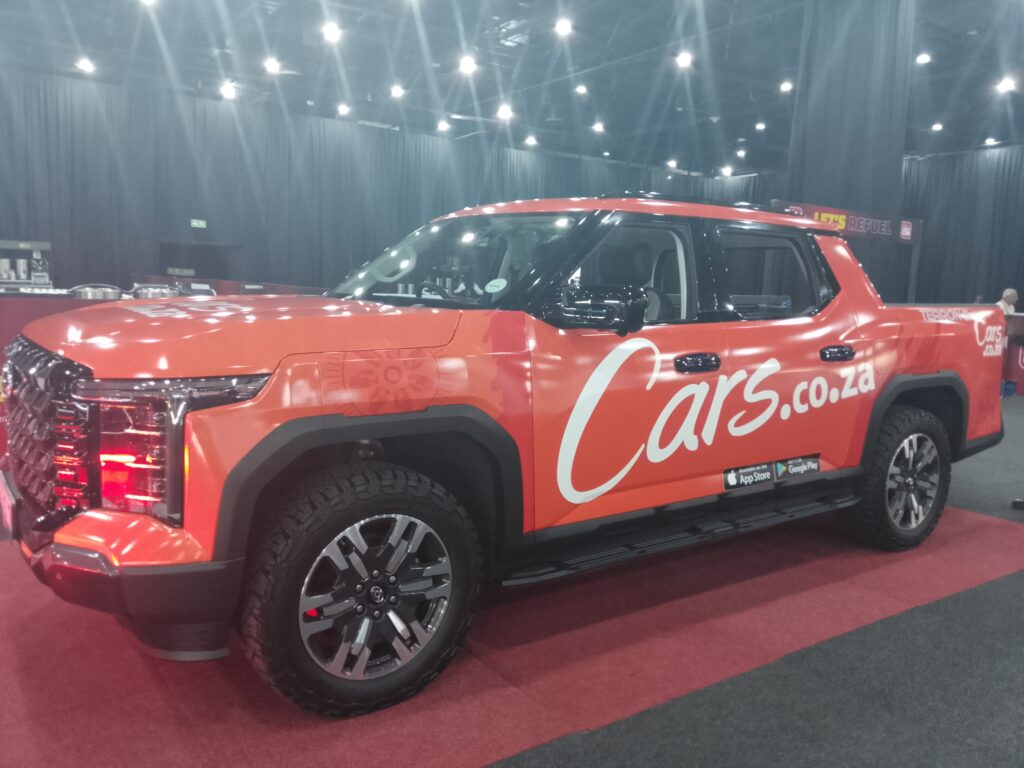
Chinese manufacturers are gaining ground.
SUVs are expanding.Double-cab bakkies continue to dominate the commercial-vehicle conversation. EVs and hybrids are beginning to establish a foothold. Traditional luxury status is being challenged. And younger, digitally connected consumers are entering the market with different expectations. For dealers, the challenge is no longer simply to stock attractive cars. It is to understand why a particular customer wants that car, what they can realistically afford, where they discovered it, what convinced them, and what might ultimately stop them from signing the deal. For financial institutions such as Absa Vehicle and Asset Finance, the millions of applications behind these trends provide a powerful lens into where consumer demand is actually moving.
And for motorists, perhaps the biggest change is the simplest:
There are more choices on the road than ever before and South African buyers are becoming increasingly sophisticated about choosing among them.The message from DealerCon 2026 is therefore not that the motor industry is slowing down. It is that the rules of the road are changing. And the brands, dealers and finance partners that understand the new South African buyer will be the ones best positioned to navigate what comes next.